
A New Focus for SMA
Finding a clinically actionable therapeutic target to help address the muscular component of the neuromuscular unit is an important area of focus to advance treatment for people living with SMA.3
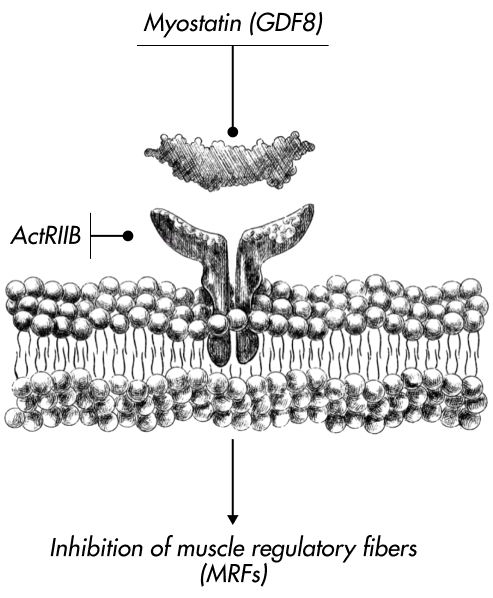
MYOSTATIN: A POTENTIAL TARGET IN SMA
Maintenance of skeletal muscle homeostasis is dependent on a balance between anabolic and catabolic signaling pathways.28
Myostatin, a potent naturally occurring protein predominantly expressed in skeletal muscles, exerts an inhibitory effect on muscle growth and overall muscle size.22

By targeting myostatin, it may be possible to promote myogenesis and protein synthesis while suppressing muscle catabolism.29
Learn more about myostatin as a potential target to address the clinical issues of muscles in people living with SMA

Myostatin Review with Jena Krueger, MD, Leslie Cortes, PhD, and Adam Fogel, PhD
In this episode: New research approaches in spinal muscular atrophy (SMA) are now targeting muscle. In this episode, host Diana Castro, MD, discusses myostatin—a new potential target in SMA. She is joined by Jena Krueger, MD, a pediatric neurologist, and Leslie Cortes, PhD, and Adam Fogel, PhD, researchers from Scholar Rock, to talk about what myostatin is, why it matters in muscle, and why it’s such an important focus for future developments in SMA.
For children and adults with neuromuscular diseases, the potential of myostatin inhibition is supported by more than two decades of preclinical and clinical research.22,29-31
Mckenna, 16
Living with SMA and advocating for progress
LIFE TAKES MUSCLE,
CHANGE TAKES YOU
References
- Antonaci L, Pera MC, Mercuri E. New therapies for spinal muscular atrophy: where we stand and what is next. Eur J Pediatr. 2023;182(7):2935-2942.
- Abati E, Manini A, Comi GP, Corti S. Inhibition of myostatin and related signaling pathways for the treatment of muscle atrophy in motor neuron diseases. Cell Mol Life Sci. 2022;79(7):374.
- Day JW, Howell K, Place A, et al. Advances and limitations for the treatment of spinal muscular atrophy. BMC Pediatr. 2022;22(1):632.
- Gnazzo M, Pisanò G, Baldini V, et al. Myostatin modulation in spinal muscular atrophy: A systematic review of preclinical and clinical evidence. Int J Mol Sci. 2025;26(12).
- Schroth M, Deans J, Arya K, et al. Spinal muscular atrophy update in best practices: recommendations for diagnosis considerations. Neurol Clin Pract. 2024;14(4):e200310.
- Parsons JA, Land N, Maravic MC, et al. Remaining burden of spinal muscular atrophy among treated patients: A survey of patients and caregivers. Ann Clin Transl Neurol. 2025;12(10):2020-2035.
- Finkel RS, Farrar MA, Saito K, et al. Final Safety and Efficacy Data From the SHINE Study in Participants With Infantile-Onset and Later-Onset SMA. Poster presented at: Annual Cure SMA Research and Clinical Care Meeting; June 2024; Austin, TX.
- Servais L, Oskoui M, Day J, et al. SUNFISH Parts 1 and 2: 4-year Efficacy and Safety Data of Risdiplam in Types 2 and 3 Spinal Muscular Atrophy (SMA). Poster presented at: Muscular Dystrophy Association (MDA) Clinical and Scientific Conference; March 2025; Dallas, TX.
- Mercuri E, Darras BT, Chiriboga CA, et al. Nusinersen versus Sham Control in Later-Onset Spinal Muscular Atrophy. N Engl J Med. 2018;378(7):625-635.
- A Study for Participants With Spinal Muscular Atrophy (SMA) Who Previously Participated in Nusinersen (ISIS 396443) Investigational Studies (SHINE). ClinicalTrials.gov identifier: NCT02594124. Updated September 27, 2024. Accessed December 10, 2025. https://clinicaltrials.gov/study/NCT02594124
- Ch’ng GS, Koh K, Ahmad-Annuar A, et al. A mixed method study on the impact of living with spinal muscular atrophy in Malaysia from patients’ and caregivers’ perspectives. Orphanet J Rare Dis. 2022;17(1):200.
- Wan HWY, Carey KA, D’Silva A, Kasparian NA, Farrar MA. “Getting ready for the adult world”: how adults with spinal muscular atrophy perceive and experience healthcare, transition and well-being. Orphanet J Rare Dis. 2019;14(1):74.
- Duong T, Braid J, Staunton H, et al. Understanding the relationship between the 32-item motor function measure and daily activities from an individual with spinal muscular atrophy and their caregivers’ perspective: a two-part study. BMC Neurol. 2021;21(1):143.
- Rodriguez-Torres RS, Uher D, Gay EL, et al. Measuring fatigue and fatigability in spinal muscular atrophy (SMA): challenges and opportunities. J Clin Med. 2023;12(10).
- Binz C, Schreiber-Katz O, Kumpe M, et al. An observational cohort study on impact, dimensions and outcome of perceived fatigue in adult 5q-spinal muscular atrophy patients receiving nusinersen treatment. J Neurol. 2021;268(3):950-962.
- Welsh EF. Belter L, Whitmire SM, Curry M, Schroth M. Unmet Needs Among Adults Living with Spinal Muscular Atrophy in the United States. Poster presented at: Muscular Dystrophy Association (MDA) Clinical and Scientific Conference; March 2025; Dallas, TX.
- McGraw S, Qian Y, Henne J, Jarecki J, Hobby K, Yeh W-S. A qualitative study of perceptions of meaningful change in spinal muscular atrophy. BMC Neurol. 2017;17(1):68.
- Mercuri E, Finkel RS, Muntoni F, et al. Diagnosis and management of spinal muscular atrophy: Part 1: Recommendations for diagnosis, rehabilitation, orthopedic and nutritional care. Neuromuscul Disord. 2018;28(2):103-115.
- Boyd PJ, Gillingwater TH. Axonal and Neuromuscular Junction Pathology in Spinal Muscular Artophy. In: Sumner CJ, Paushkin S, Ko CP, eds. Spinal Muscular Atrophy: Disease Mechanisms and Therapy. Elsevier; 2017:133-151.
- Le Verche V, Sunshine SS, Hammers D. Skeletal Muscle in Spinal Muscular Atrophy As an Opportunity for Therapeutic Intervention. In: Sumner CJ, Paushkin S, Ko CP, eds. Spinal Muscular Atrophy: Disease Mechanisms and Therapy. Elsevier; 2017:341-356.
- Deguise MO, Patitucci TN, Ebert AD, Lorson CL, Kothary R. Contributions of Different Cell Types to Spinal Muscular Atrophy Pathogenesis. In: Sumner CJ, Paushkin S, Ko CP, eds. Spinal Muscular Atrophy: Disease Mechanisms and Therapy. Elsevier; 2017:167-181.
- Jha NN, Kim J-K, Her Y-R, Monani UR. Muscle: an independent contributor to the neuromuscular spinal muscular atrophy disease phenotype. JCI Insight. 2023;8(18).
- Wirth B, Mendoza-Ferreira N, Torres-Benito L. Spinal Muscular Artophy Disease Modifiers. In: Sumner CJ, Paushkin S, Ko CP, eds. Spinal Muscular Atrophy: Disease Mechanisms and Therapy. Elsevier; 2017:191-210.
- Durmus H, Yilmaz R, Gulsen-Parman Y, et al. Muscle magnetic resonance imaging in spinal muscular atrophy type 3: Selective and progressive involvement. Muscle Nerve. 2017;55(5):651-656.
- Deymeer F. Natural history of SMA IIIb. Neurology. August 26, 2008.
- Buchthal F, Olsen PZ. Electromyography and muscle biopsy in infantile spinal muscular atrophy. Brain. 1970;93(1):15-30.
- Perez-Garcia MJ, Kong L, Sumner CJ, Tizzano EF. Developmental Aspects and Pathological Findings in Spinal Muscular Atrophy. In: Sumner CJ, Paushkin S, Ko CP, eds. Spinal Muscular Atrophy: Disease Mechanisms and Therapy. Elsevier; 2017:21-42.
- McCarthy JJ, Esser KA. Anabolic and catabolic pathways regulating skeletal muscle mass. Curr Opin Clin Nutr Metab Care. 2010;13(3):230-235.
- Lee S-J. Targeting the myostatin signaling pathway to treat muscle loss and metabolic dysfunction. J Clin Invest. 2021;131(9).
- Wagner KR. The elusive promise of myostatin inhibition for muscular dystrophy. Curr Opin Neurol. 2020;33(5):621-628.
- Lee S-J, Bhasin S, Klickstein L, Krishnan V, Rooks D. Challenges and future prospects of targeting myostatin/activin A signaling to treat diseases of muscle loss and metabolic dysfunction. J Gerontol A Biol Sci Med Sci. 2023;78(Suppl 1):32-37.
