THE CASE
FOR MUSCLE
IN SMA
Living with SMA and advocating for progress
Looking at the role of muscle, why it matters in SMA, and how it connects to your daily life.

It’s okay to want more

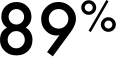

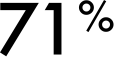


MOTOR NEURONS ARE ONLY HALF THE STORY
Is there an opportunity for more in the way we think about treating SMA? The answer lies in the two-part team known as the motor unit.
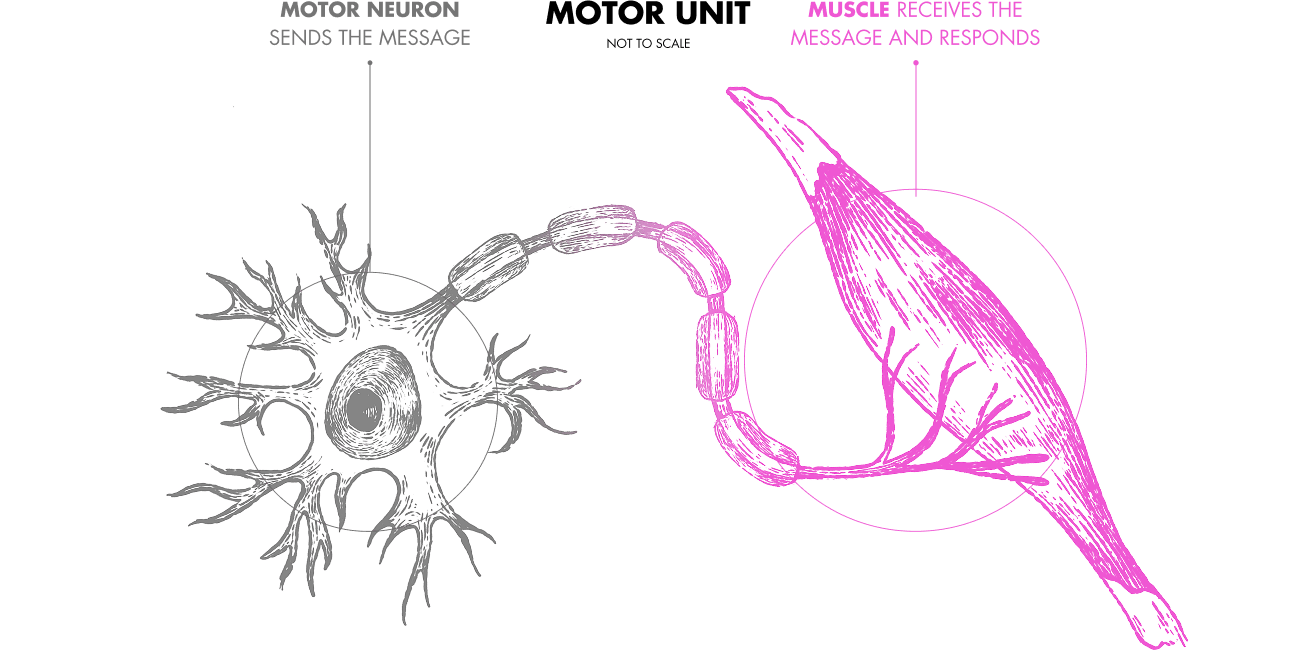
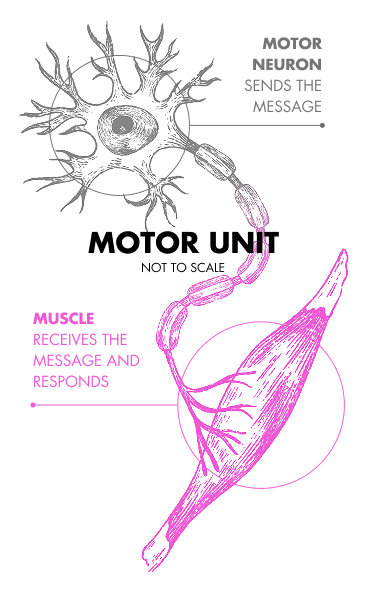
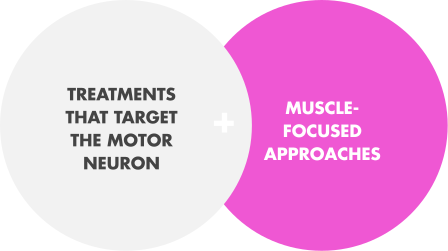
By definition, SMA is a neuromuscular disease that affects both parts of the motor unit, resulting in the loss of motor neuron cells and muscle. While SMN-targeted treatments focus on stopping or preventing motor neuron loss, they don’t directly target the muscle—the other half of this unit.
As SMA progresses, it’s not only neurons that are affected. Muscles often continue to atrophy, which weakens their ability to respond to signals from the motor neurons. Over time, the whole motor unit becomes less effective. Motor function declines, and that has a real impact on daily living.
But there’s still muscle to build on
Some muscles remain healthy or partially healthy, and it’s possible to preserve and strengthen them. This is why muscle is an important focus for SMA care—and why the community is interested in addressing SMA more holistically, including through physical therapy, other muscle-focused approaches, and SMN-targeted treatments.